
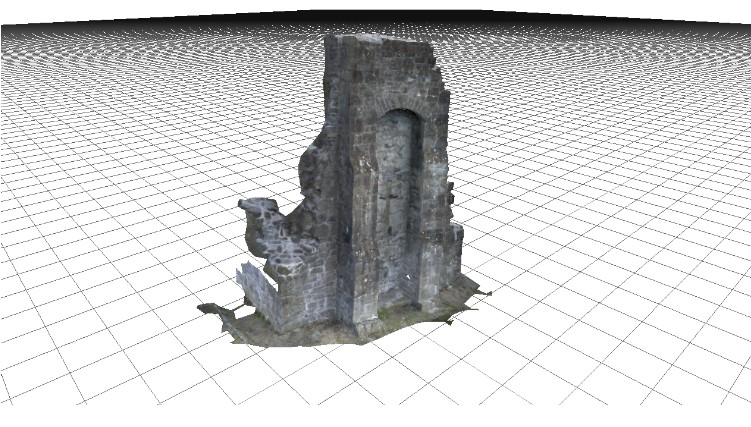
What is Photogrammetry?
Photogrammetry is the art and science of extracting 3D information from a series of photographs of an object or site, to produce an exact 3D model, or a 3D image. This can also be used to pick up details on objects that might not be seen otherwise.
So how do we gather the photos needed and process them to make the 3D image?
Firstly, you need to capture the photos on any device (Camera phone, camera, or any device capable of taking a photo). You must take the photos in sequence starting at a set point either at the top or bottom of object and working your way around the object until you have taken as many photos as possible of the object. Every photo must overlap the earlier photo by about 80% of the previous photo. Once you have collected the photos you then save them onto your computer in a file making sure they load in the order you have taken them.
Next you will need to download software to produce your 3d image. There are many different photogrammetry software available online, some paid versions and some free versions. The one I use is the paid version of 3d Zephyr, but they also do a free version to try out which is great for beginners.
Next you will then load all your photos into the software for processing in the same order as you have taken them. Then follow the software instructions which will guide you through the process of creating your 3d image. Most software is easy to use but does require a little practice to get it right.
Once the software has finished it is processing your 3d image will appear and then you can fine tune it with other options depending on the software you are using. This is the process I use, and it works well for me but as I said it does take a bit of practice, but well worth it when you see the results!
So why and for what do I use Photogrammetry?

Photogrammetry can be helpful in the study of the headstones in old graveyards where they have become faded over time, and impossible to read the inscription. Using this method, we can make exact 3D images of the headstones and pick up the inscriptions lettering that otherwise could be gone from weathering over time. It can be used for many different purposes but I many uses it for historic purposes.
This use by historical groups as it is a cost-effective and sustainable method to help them in their research, without the need for expensive equipment. Photogrammetry is widely used in Egypt in the tombs to map them out, so Archaeologists can study them in detail, without having to disturb the tombs. This means they get a detailed image to be studied further and to show people their contents. This would be a more advanced type of photogrammetry, but shows how widely it is used for historic purposes.

This is something that everybody can get involved ,in young or old and can be a fun activity for families to do together and have fun. As I said, it just takes a little practice with minimal equipment and free software to get started so is a cost-effective way to get out an explore your local area and make 3d images of things you find like old headstones and other objects and buildings.
This is only a basic guide to help you get started but there are more advance ways and courses out there if you want to really get involved and take it further. The images in this blog are examples of photogrammetry from St. Finian’s Medieval church and graveyard, Esker, and Fr. McCartan’s headstone in the same graveyard, and how effective it is to make 3d models.
Leave a Reply