
A ledger for Lucan Manor by Agmondisham Vesey (the elder) – by Elaine Hurley, SOL.
Searching archives online can throw up intriguing documents in unexpected places, such as this listing I spotted last year in the archive of Columbia University, New York, USA:
Account book showing receipts and expenditures of the Vesey family at Lucan, near Dublin, 1710-1727 [manuscript]
Author: Vesey, Agmond.
Title: Account book showing receipts and expenditures of the Vesey family at Lucan, near Dublin, 1710-1727 [manuscript].
Production: Lucan, Leitrim County, Ireland, 1708-1727.
Description: [82] p. ; 36 cm.Notes: Manuscript on paper.
Accounts of a rather large estate.
Many loose leaves laid in, some with scraps of accounts, others merely rough figuring.
Subjects: Vessey family.
The account book is held in the Rare Book and Manuscript Library at Columbia within a varied collection of accountancy examples across hundreds of years.
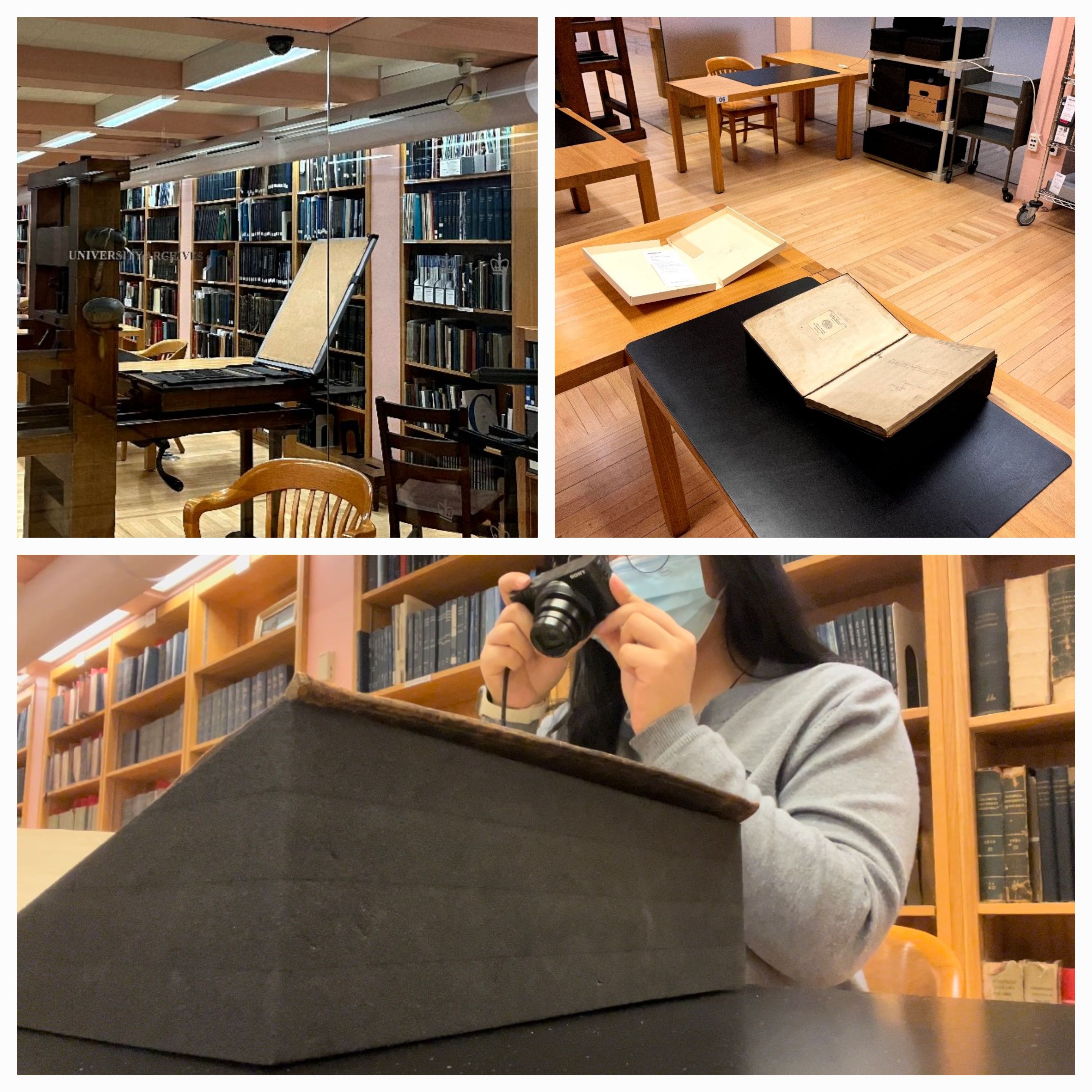
It is not digitised but the description was tantalising enough for the team at Society for Old Lucan (SOL) to want to find out more about it. Unfortunately, SOL budgets don’t allow for transatlantic research trips! Instead, on the advice of the library experts at Columbia we hired a local graduate student to photograph it on behalf of SOL.
The grad student, Yu enthusiastically took on this task for us, promptly arranging a visit to view and record the book in its entirety (see images of this process below).
Images 1 – 3) Book photographed in Columbia University.

Image 4) Front cover of book.

The author of this ledger was The Right Honourable Agmondisham – pronounced Amersham – Vesey (the elder), father of the Agmondisham who went on to build Lucan House as we know it today.
At the time of the dedication written in this book in 1708 (see image below), the younger Agmondisham was likely a babe in arms as his birth year is listed as 1708 in many sources.
Agmondisham the elder possessed Lucan Manor due to his earlier marriage to the by-then-deceased Charlotte Sarsfield (niece of Patrick Sarsfield). By 1708 he was married to Jane Butler, the mother of Agmondisham junior. They had several children together.
Image 5) Inscription in the ledger

Visitors to Lucan House grounds or those with a copy of the Blessed Virgin Mary Church and Graveyard transcription book may be familiar with Jane as she erected a marble monument to Agmondisham on his death circa 1738 which can still be seen today. The inscription reads:
‘This Chappel was repair’d by Jane Lady Butler & this
Monument erected to the Memory of her dearly
Beloved Husband A V. deceased the 23d of March
An: Domi: 1738. with whom he is interr’d
Where thou Dyest there will I dye &
Where thou art buryed there will I be buryed also
This digital reconstruction (image below) by SOL committee member Jonathan Cully shows the home of the Vesey family, as it most likely looked during the mid-18th century before Agmondisham junior grew up and commissioned the Palladian-style Lucan House circa 1772.
The later building, Lucan House still stands in the Lucan Demesne lands in the heart of Lucan Village, Co. Dublin and is today in use as the Residence of the Italian Ambassador to Ireland.
Image 6) 3D reconstruction of Lucan Manor during the 18th century before Lucan House was built.

There are over seventy pages to explore in this account book covering a period of over fifteen years. Some pages show familiar names and places such as ‘Dodds farm in Lucan’ (see image below) along with references to ‘Tubberneclug’, ‘Cooltreny’ and ‘Westpanstowne’.
Image 7) Page of ledger headed Dodds farm in Lucan with payments in 1710/1711/1712

Glimpses into the lives of the Vesey family members are seen in the payments coming in and going out. These include cash paid for a ‘coach & harnes’ and money gifted by Agmondisham ‘as Godfather to my sister Hamiltons child’.
The daily expenses point to their status and the trappings of their wealthy lifestyle with sums noted by Agmondisham as paid to ‘Murphy the paintor for my picture given to Frank’ and to ‘Barry the coachmaker paid for my chaise’.
Recurring costs include ‘expenses gave my wife for housekeeping’ and similarly ‘expenses paid my wife for the children’. His older daughters from his marriage to Charlotte Sarsfield received regular allowances and items of fine clothing.
The excerpt below shows money refunded to ‘Cousin Vesey who bought me 2 pair of silk stockings from London’.
More practical payments are listed to a mason, glazier, ‘shoomaker’ and tailor and in many cases, specific suppliers are mentioned by name such as ‘Le Voshe’ who is paid £6 for two ‘perrywigs’ – periwigs & smaller perukes were styles of fashionable wigs worn largely as status symbols.
Can you also spot a mention of a silver teapot? And the allowance paid to his daughters?
Images 8 & 9) Details in ledger

Here we see the purchase of ‘2 hogsheads of claret’ (2 large barrels of fine wine).

There is a lot to learn from this account book including information about land ownership, rents and commerce at the time.
Agmondisham lists many names including staff, tradespeople and those he receives rent from and exchanges goods and services with. There is evidence of interaction with his wider family members and other landowners and some very sizable transactions appear on the balance sheet.
These snippets provide insights into the Lucan of over 300 years ago offering potential leads for more detailed research.
If you would like to attempt a short taster transcription, review this note by a J. Richardson, found in the book (and presumably directed to Jane) and tell us what it says. Answers can be emailed to oldlucan@gmail.com. Look out for more information on the expanded transcription project soon.
Image 10) Note in ledger

The existence of this ledger far from home begs the question of how it ended up in New York and suggests the exciting prospect that there may be more pieces of Lucan history out there yet to be revealed….
Blog post by Elaine Hurley, Society for Old Lucan, January 2023.
Leave a Reply